IRLFacts
Hands in the Water

Brevard Zoo and the new aquarium.

Lagoon recovery depends on many partners — scientists, agencies, universities, nonprofits, and volunteers. Brevard Zoo is one of the largest hands-on operational partners in Brevard County: its Restore Our Shores program runs boats, rescues manatees, and plants seagrass with community volunteers. The Zoo is preparing to break ground in December 2026 on Bowen Aquarium — a $140 million lagoon-focused conservation aquarium on the Banana River near Port Canaveral.

Celebrating 10 Years of Restore Our Shores

A decade of oyster reefs, seagrass plantings, mangroves, native shoreline plants, and 1,700+ oyster-gardening volunteers — on the same 156-mile lagoon we live on.

Source: Brevard Zoo on YouTube, July 2024

Four Programs. One Ecosystem.

What the Zoo is actually doing for the lagoon.

🦭

Manatee Rescue & Rehabilitation

Brevard Zoo opened its manatee rehabilitation center in early 2025 — one of only a handful of critical care facilities in Florida licensed to treat sick, injured, and orphaned manatees. In June 2025, the Zoo released its first rehabilitated manatee back to the wild. In January 2026, they welcomed Tugboat and Andme, two new patients in care.

Manatee program at Brevard Zoo →
🌱

Restore Our Shores — Seagrass Nursery

The Zoo built its own seagrass nursery specifically to grow shoal grass (Halodule wrightii) and manatee grass (Syringodium filiforme) for lagoon replanting. In April 2025, the Restore Our Shores team celebrated its first nursery-grown seagrass planting — a milestone that will feed larger-scale reintroduction efforts as the seagrass nursery at Bowen Aquarium comes online.

Restore Our Shores 2025 milestones →
🦪

Oyster Reef & Living Shoreline Construction

Restore Our Shores volunteers have installed hundreds of oyster reefs and living shorelines along the lagoon over the past decade — soaking up nitrogen, filtering water, and armoring shorelines against storm damage. These are SOIRL-funded projects executed by the Zoo's community volunteers. Real people, real weekends, in the water.

Volunteer with Restore Our Shores →
🐟

Bowen Aquarium (in development)

The Zoo's second campus, planned for a 14-acre waterfront site on the Banana River near Port Canaveral. Groundbreaking is scheduled for December 2, 2026, with 24 to 30 months of construction expected to follow. When it opens, it will be Brevard's flagship lagoon education and applied-research facility — with a seagrass nursery visible to visitors, a coastal conservation hub, manatee and sea turtle rehabilitation capacity, and an aquaculture education program already being developed with Cocoa Beach Junior/Senior High School.

Bowen Aquarium project site →
Brevard Zoo

The voice of a working conservationist.

Brevard Zoo has evolved over the last two decades from a regional wildlife park into one of the most active applied-conservation organizations in Florida — running manatee rescue, spearheading seagrass restoration, coordinating volunteer oyster-reef installation across the lagoon, and now driving construction of the Aquarium at Brevard Zoo.

The Zoo does not lecture from a distance. It runs the programs, mobilizes the volunteers, treats the sick animals, and builds the infrastructure. Every SOIRL habitat category project — living shorelines, planted shorelines, oyster reefs, and now seagrass nursery grow-out — has Brevard Zoo hands on it in one form or another.

"We share our joy of nature to help wildlife and people thrive."

Brevard Zoo's published mission statement. Notice the “and people” — the whole restoration model runs on volunteer weekends, community classes, and a public that shows up. That is the model that has to hold if the lagoon is going to keep recovering.

Coming next

Bowen Aquarium. Ground breaks December 2, 2026.

Bowen Aquarium is a $140 million lagoon-focused conservation aquarium being built by the East Coast Zoological Foundation (Brevard Zoo's parent) on a 14-acre waterfront site on the Banana River, near Port Canaveral. It is designed from the ground up as a working restoration facility that happens to be open to the public — not a public destination that happens to include some conservation programs.

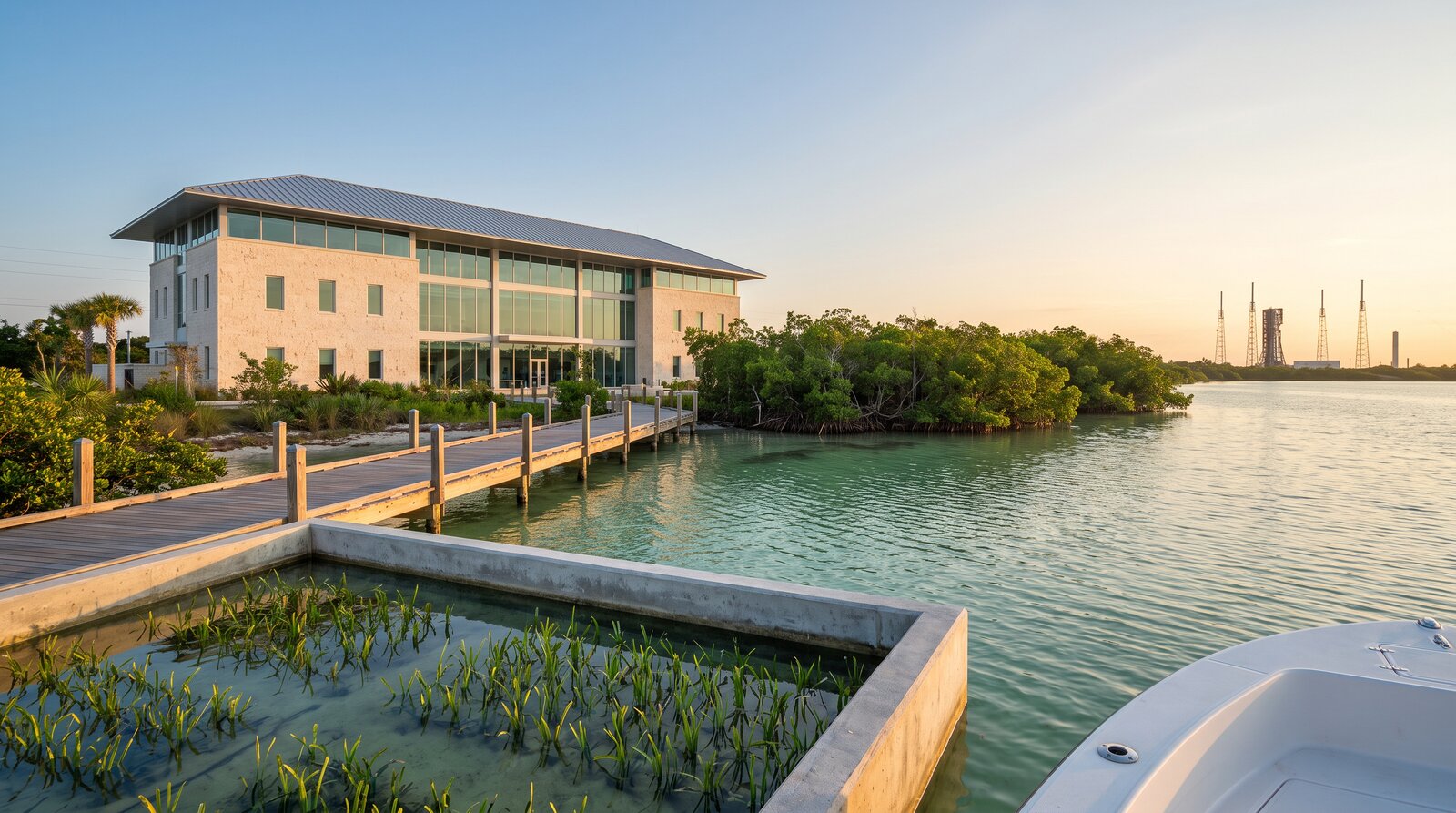
Illustrative editorial rendering of a lagoon-side conservation aquarium at sunset. A three-story modern building with pale limestone walls, generous glass facing the water, and a standing-seam metal roof sits behind mangroves. A boardwalk deck extends over shallow lagoon water, and an outdoor seagrass nursery tank in the foreground shows young shoal grass shoots. Kennedy Space Center rocket gantries are silhouetted in the distant background. A boat is anchored in the right foreground.
Illustrative editorial rendering (not the official architectural design). The Bowen Aquarium campus will include direct waterfront access, an outdoor seagrass nursery, and rehab facilities integrated with lagoon water. For the official renderings, see bowenaquarium.org.

Timeline

Groundbreaking: December 2, 2026. Construction: 24 to 30 months. Expected opening window: 2028 to 2029. The Zoo has confirmed the December date in an official press release and is now completing final planning and site preparation.

Location and site

14-acre waterfront campus on the Banana River near Port Canaveral, adjacent to State Road 528. The site was chosen for direct Indian River Lagoon access so exhibits, research tanks, and rehab facilities can pull, treat, and return lagoon water in real time — and so seagrass and shoreline restoration can happen visibly, on the water, in front of the public.

What is inside

A multi-tank public aquarium featuring native lagoon species. A three-story Coastal Conservation Hub with classrooms, research labs, and community meeting space. A sea turtle care complex expanded from the Zoo's existing Sea Turtle Healing Center in Viera. Manatee rehabilitation capacity that extends the Melbourne center. Two seagrass species (Halodule and Ruppia) already growing at the site, with a large outdoor seagrass nursery integrated into the life-support system for other animals.

Programs already underway

The Zoo is running an aquaculture education program with Cocoa Beach Junior/Senior High School students, teaching them to grow seagrass and manage life-support systems — with the plan that some of those students will do internships at the aquarium when it opens. In February 2026, the project received a $1.75 million federal grant specifically for sea turtle research and rehabilitation.

Why it matters for the lagoon

Restoration at scale requires infrastructure that keeps working over generations and a public that keeps caring after the current crisis fades. Bowen Aquarium is one of the largest single announced investments in both permanent educational infrastructure and lagoon-focused living exhibits on this water. Visitors will see live seagrass restoration happening on-site. Students will learn the science hands-on. Researchers will have permanent facilities dedicated to lagoon problems.

Funding model

Primarily private philanthropy — the East Coast Zoological Foundation's Our Legacy Campaign has raised more than $100 million of the $140 million total. Public partners include the Canaveral Port Authority (site lease), the federal government (the $1.75 million sea-turtle grant), and Brevard County (land development agreement). The aquarium is not funded by the SOIRL half-cent tax.

Bowen Aquarium official site → Brevard Zoo interview on the project →

Sources: East Coast Zoological Foundation press release (April 14, 2026), Bowen Aquarium project FAQs, One Lagoon One Voice podcast episode 3, and Viera Voice / Business Journal reporting on the federal grant.

See the ballot and how to vote →